
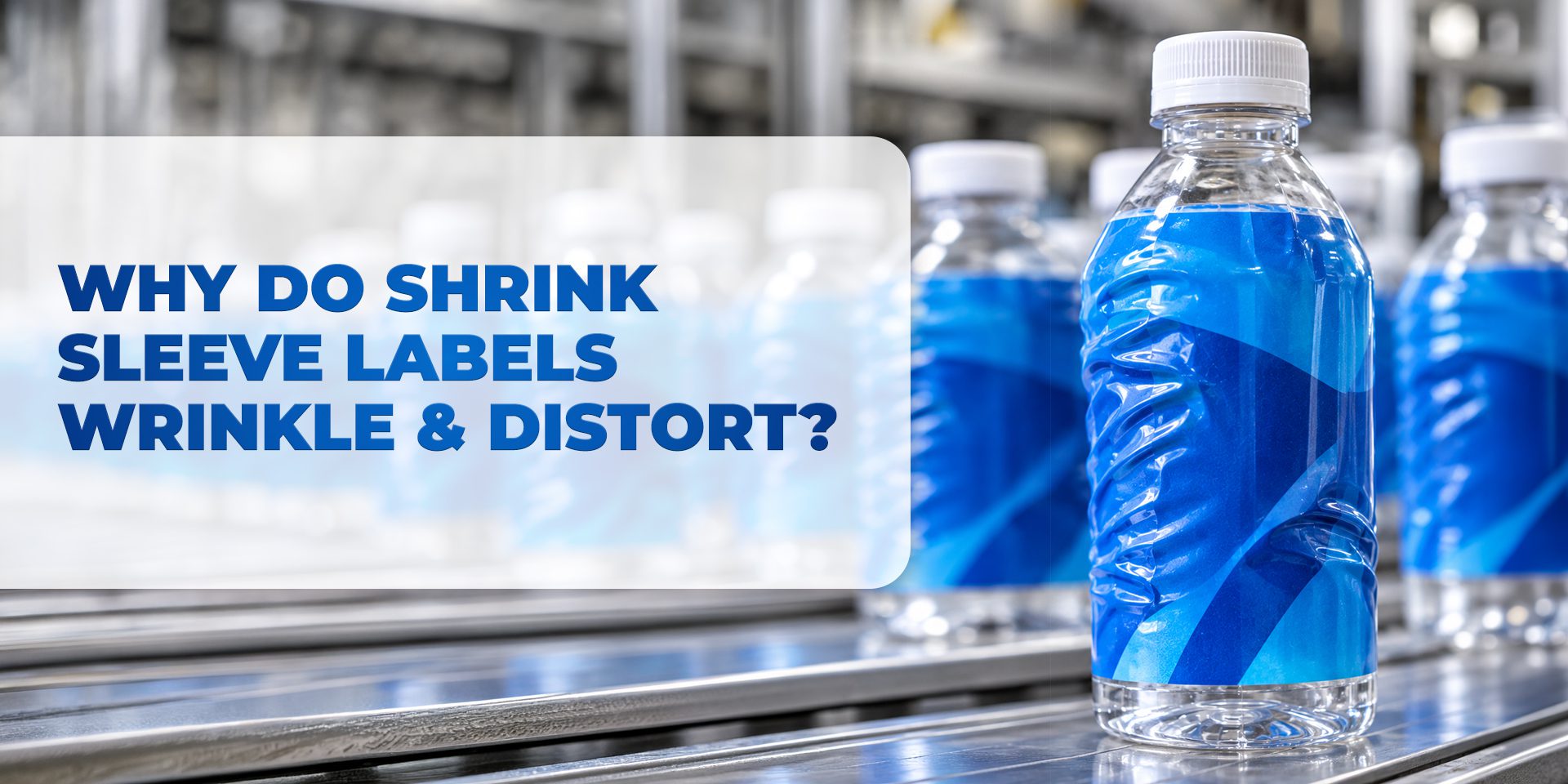
Why Do Shrink Sleeve Labels Wrinkle, Distort, or Shrink Unevenly? Common Causes and Solutions
Shrink sleeve labels provide 360-degree coverage and let manufacturers design unique packaging while maintaining consistent product identification. However, achieving a smooth, well-fitted sleeve needs the right mix of film material, container design, applicator, and heat distribution.
When things go wrong, manufacturers might see wrinkles, uneven shrinkage, sleeves that don’t fit, or distorted graphics.
Knowing what causes these issues is the first step toward improving application quality and keeping production steady.
1. What Causes Wrinkles in Shrink Sleeve Labels?
Wrinkles in sleeve labels happen when the film doesn’t shrink evenly around the container or when the sleeve isn’t placed properly before it goes into the heat tunnel.
Common reasons include:
- Incorrect film choice: The way the film shrinks might not fit the container’s shape.
- Poor sleeve placement: Sleeves that are not in the right spot can fold when they shrink.
- Uneven heat distribution: Uneven heat makes some parts of the sleeve shrink faster than others.
- Incorrect tunnel settings: Temperature, air flow, and how fast the conveyor moves all change the look.
How do you stop shrink sleeve labels from wrinkling?
Check that the film is right for the shape of the container. Then look at how the sleeve’s placed and check the heat tunnel settings. Adjusting airflow, temperature, and conveyor speed can improve the look.
2. Why Do Shrink Sleeves Shrink Unevenly?
Shrink sleeves shrink unevenly when different parts of the sleeve receive inconsistent heat levels or the film’s shrink characteristics don’t match the container shape.
This can make some areas loose, too tight, or look messy around the container.
Things to check are:
- Heat spread through the tunnel.
- Shape of the container and its surface.
- Shrinkage characteristics of the film. What material is it?
- How the conveyor moves and how far apart the products are.
What makes shrink sleeves shrink unevenly?
Uneven heat exposure and incompatible film that doesn’t match the product’s container are the two main reasons shrink sleeves contour unevenly. Proper tunnel configuration and testing the actual container-and-sleeve combination can help identify the source.
3. What Causes Label Distortion or Graphic Damage?
Distorted graphics happen when the design changes shape as it shrinks. Since shrink sleeve film gets smaller around the container, the design must be made to match how the film shrinks.
Common issues are:
- Artwork not designed for shrinking.
- Uneven heat.
- Wrong film choice.
- Containers with curves or deep areas.
How do you stop shrink sleeve labels from getting distorted?
Talk to your film supplier and design team to plan for the container’s shape and the films’ shrinking. Test the printed sleeve in production before making a big run.
4. How Does Container Shape Affect Shrink Sleeve Application?
Container shape is critical to how well the shrink sleeve works. Cylindrical containers are easier to label, while tapered, curved, or recessed containers require careful film selection and application adjustments.
How much and where the film shrinks will change how it looks.
For companies using shaped containers, choosing the right sleeve material and application method is critical.
Does container shape affect sleeve application?
Yes. The container shape determines how much the sleeve must shrink and where it stretches most. Hard-to-shape items might need a specific film and careful heat use.
5. Can the Wrong Shrink Tunnel Cause Labeling Problems?
Yes. The shrink tunnel is very important in the application process.
Different tunnel types have benefits depending on the container, the film, the speed, and application requirements.
For example:
- Steam tunnels: Provide heat and are often used for tricky container shapes.
- Electric heat tunnels: Let you change heat and air flow for different uses.
- Radiant heat tunnels: Use radiant heat to shrink the film around the container.
What is the best heat tunnel for sleeve labels?
No one tunnel is best for all. The right choice depends on the container shape, the film, the speed, and the desired finished appearance.
6. How Do You Get Consistent Shrink Sleeve Results?
Getting steady results requires more than choosing the right film. Manufacturers must think about the process, from where the sleeve goes to the final heat.
Things to think about include:
- Pick a film that fits the container shape and how much it needs to shrink.
- Make sure the sleeve is in place before moving into a heat tunnel.
- Set up the shrink tunnel properly.
- Maintain conveyor speeds and product spacing.
- Test the process in actual production conditions before making a big run.
An all-in-one shrink sleeve system helps companies keep the sleeve on and heat-shrink it correctly for steady results.
7. When Should You Update Your Shrink Sleeve Equipment?
As production grows, older machines may not keep up with the speed, accuracy, or quality you need.
Signs it might be time to upgrade include:
- Increasing production volumes.
- Frequent sleeve positioning problems.
- Inconsistent finished-label quality.
- Excessive downtime or manual adjustments.
- New container shapes or packaging requirements.
Modern shrink sleeve applicators and tunnel systems can help manufacturers improve production efficiency, accommodate new packaging designs, and maintain consistent application quality.
Frequently Asked Questions About Shrink Sleeve Application
Why are my shrink sleeve labels wrinkling?
Wrinkling can result from improper sleeve positioning, incompatible film, uneven heat distribution, or incorrect tunnel settings.
Can you shrink sleeve labels without a heat tunnel?
Some small-scale applications use alternative heating equipment, but industrial production typically uses dedicated steam, electric, or radiant-heat tunnels for controlled, repeatable results.
What type of shrink film works best for irregularly shaped containers?
The best film depends on container geometry, required shrink percentage, application conditions, and packaging requirements. Film suppliers and an AFM representative can help determine the appropriate material.
How do you increase shrink sleeve labeling production speed?
Production speed depends on applicator capacity, container handling, sleeve material, and tunnel performance. An appropriately sized automated system can help increase throughput.
